Every coffee on our origins page sits on a ruler, from the lowest farm to the highest. It is not there for decoration. After the plant and the process, height is one of the clearest clues to what a coffee will taste like.
Coffee grows in a band around the middle of the world, between the tropics. Close to the equator the lowlands are hot, so good coffee is usually grown up in the hills and mountains, where the air is cooler and the nights are cold.

Slow cherries
Cool air slows everything down. A coffee tree on a high slope flowers, sets fruit and ripens more slowly than one in a warm valley, and the cherries hang on the branch for longer. That extra time lets the seed inside build up more sugars and acids. The bean that comes out of it is usually smaller, harder and denser.
Dense beans roast differently, and they taste differently. They tend to give a brighter cup, with more of the acidity that reads as fruit: citrus, berries, stone fruit. Lower, warmer farms tend to give rounder coffees, with less acidity and more of the flavors we think of as comforting, like nuts, chocolate and caramel.
Two ends of the shelf
Our shelf shows the pattern well. The Ethiopia Guji and the Kenya Nyeri are bright and lively: jasmine, bergamot and peach in one, blackcurrant and grapefruit in the other. Brazil Cerrado is the opposite, nutty and chocolatey, with low acidity and a full body. Colombia Huila sits in between, round and sweet, with red apple and caramel. Look each one up on the ruler and see where it lands.
Not the whole story
Height does not add flavor to a coffee. It gives the cherry time. What the farmer does with that time still matters: how ripe the cherries are when they are picked, how they are processed, how carefully they are dried. A high farm with careless picking will not beat a lower one that only takes the reddest fruit.
Height does not add flavor to a coffee. It gives the cherry time.
It changes how we roast, too. Dense, high-grown beans take heat slowly and hold on to their brightness, which is one reason we roast our single origins light. Roast them dark and the fruit that the mountain gave them is the first thing to go.
Taste it for yourself
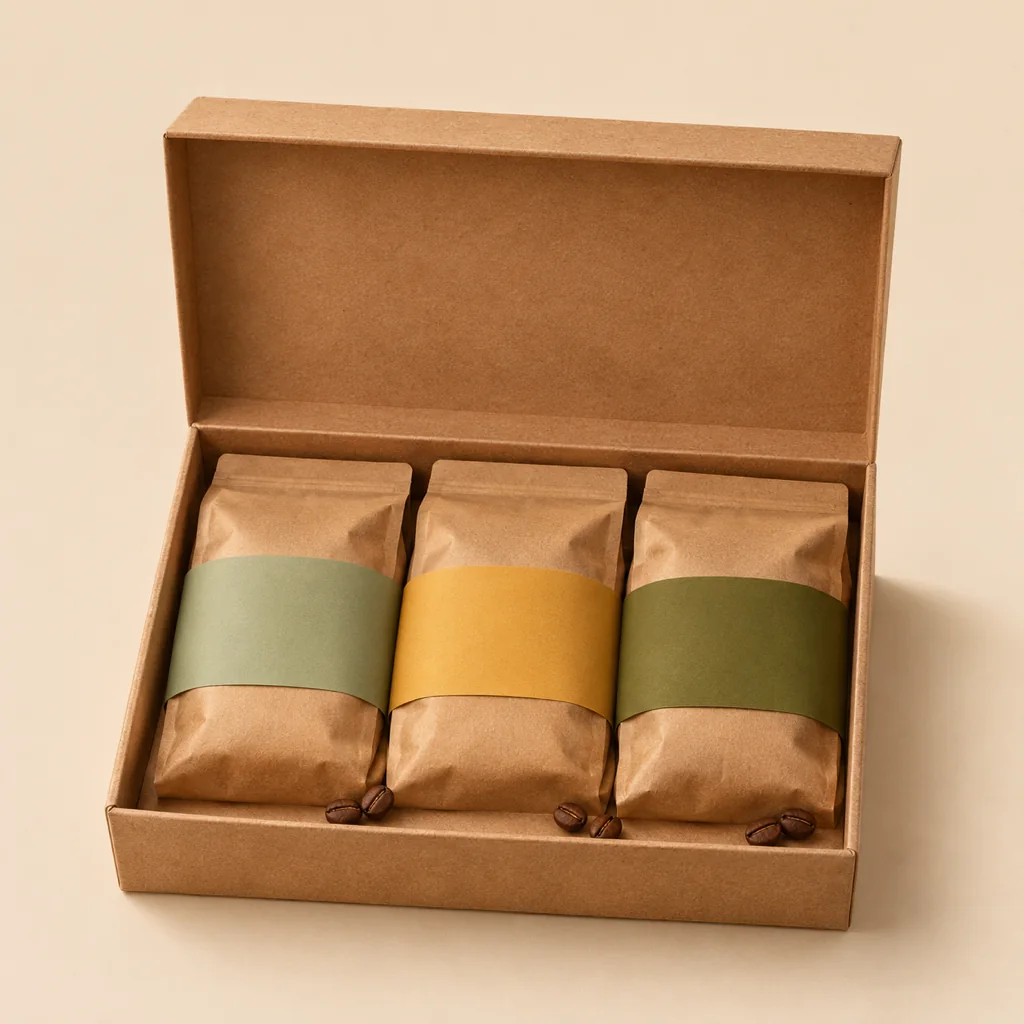
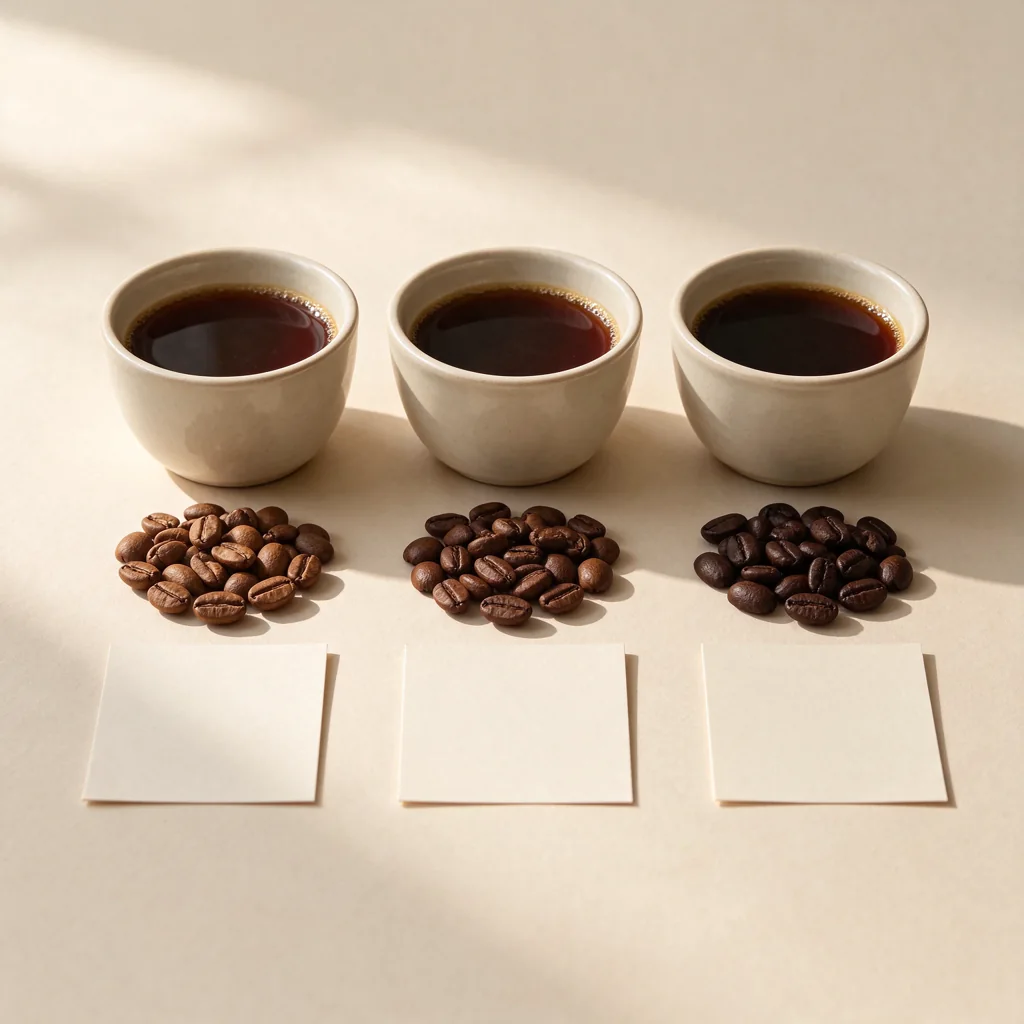
The clearest way to learn it is side by side. Brew a bright coffee and a round one with the same recipe, in the same cups, and taste them as they cool. The brightness shows most when the cup is warm rather than hot. The Tasting Flight Gift Box holds three 100 g single origins with cards to compare them, which makes the job easy.
Next time a coffee surprises you with its brightness, look at where it grew. More often than not, it grew high, slowly, in cool air.