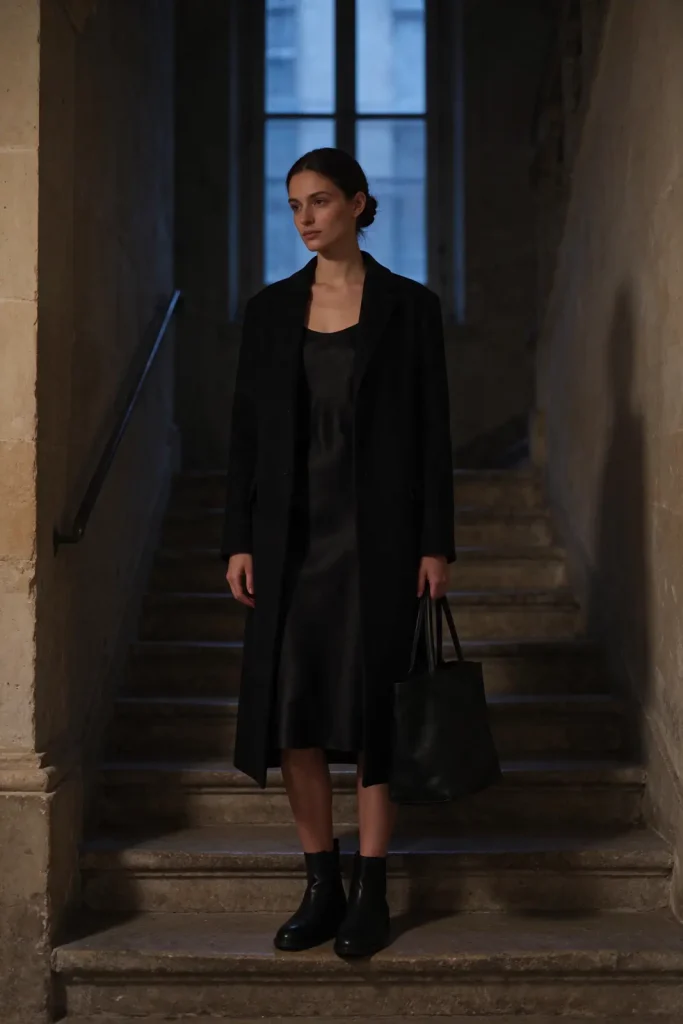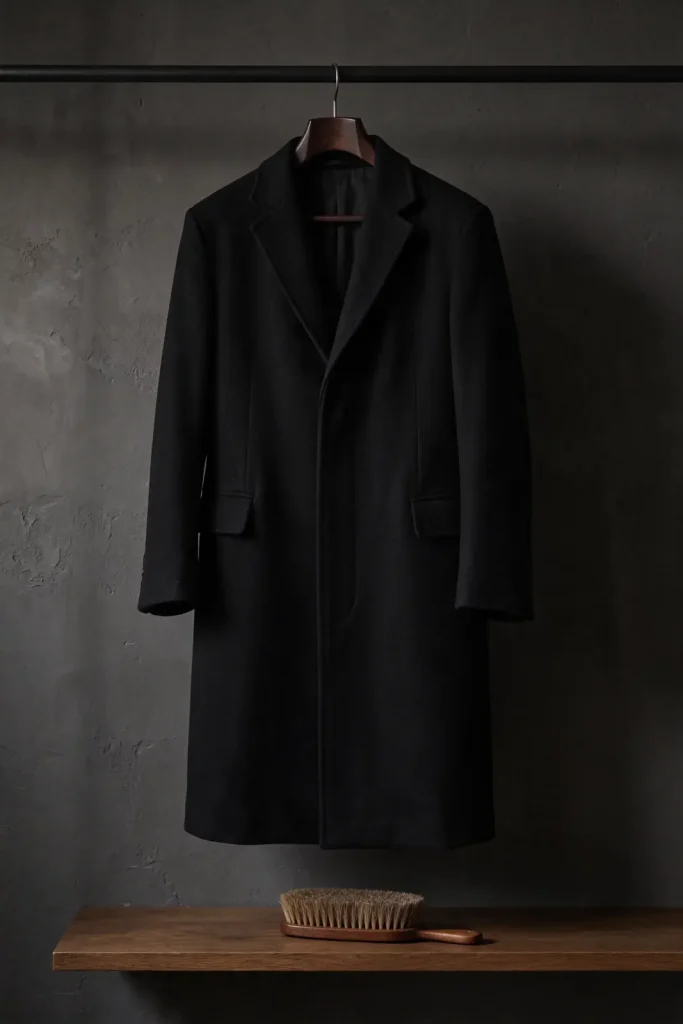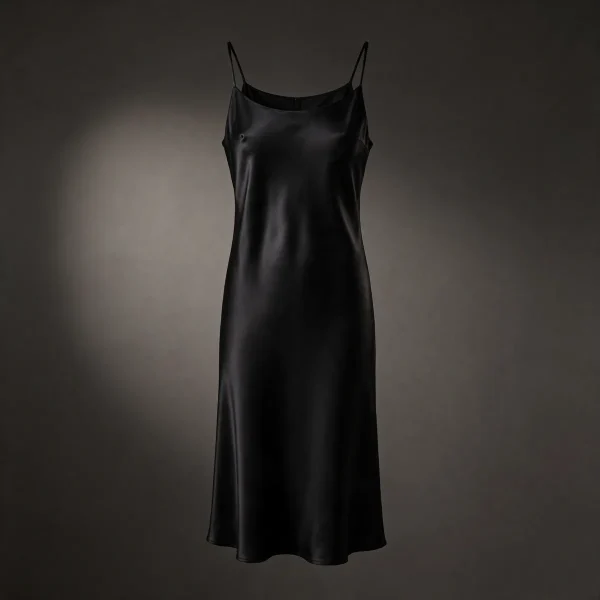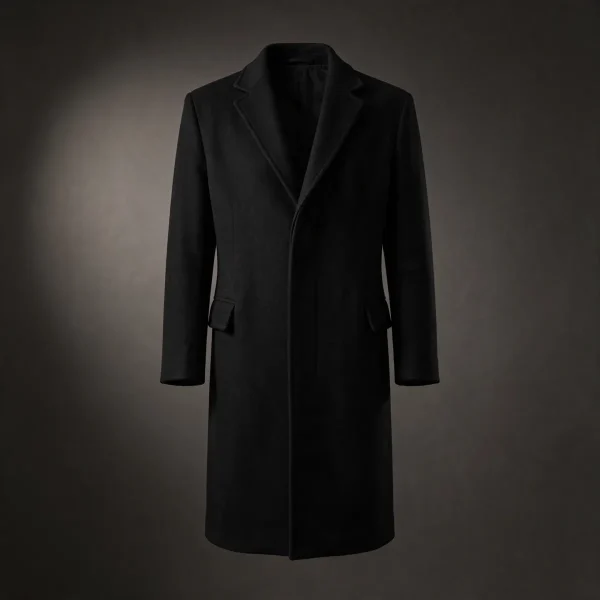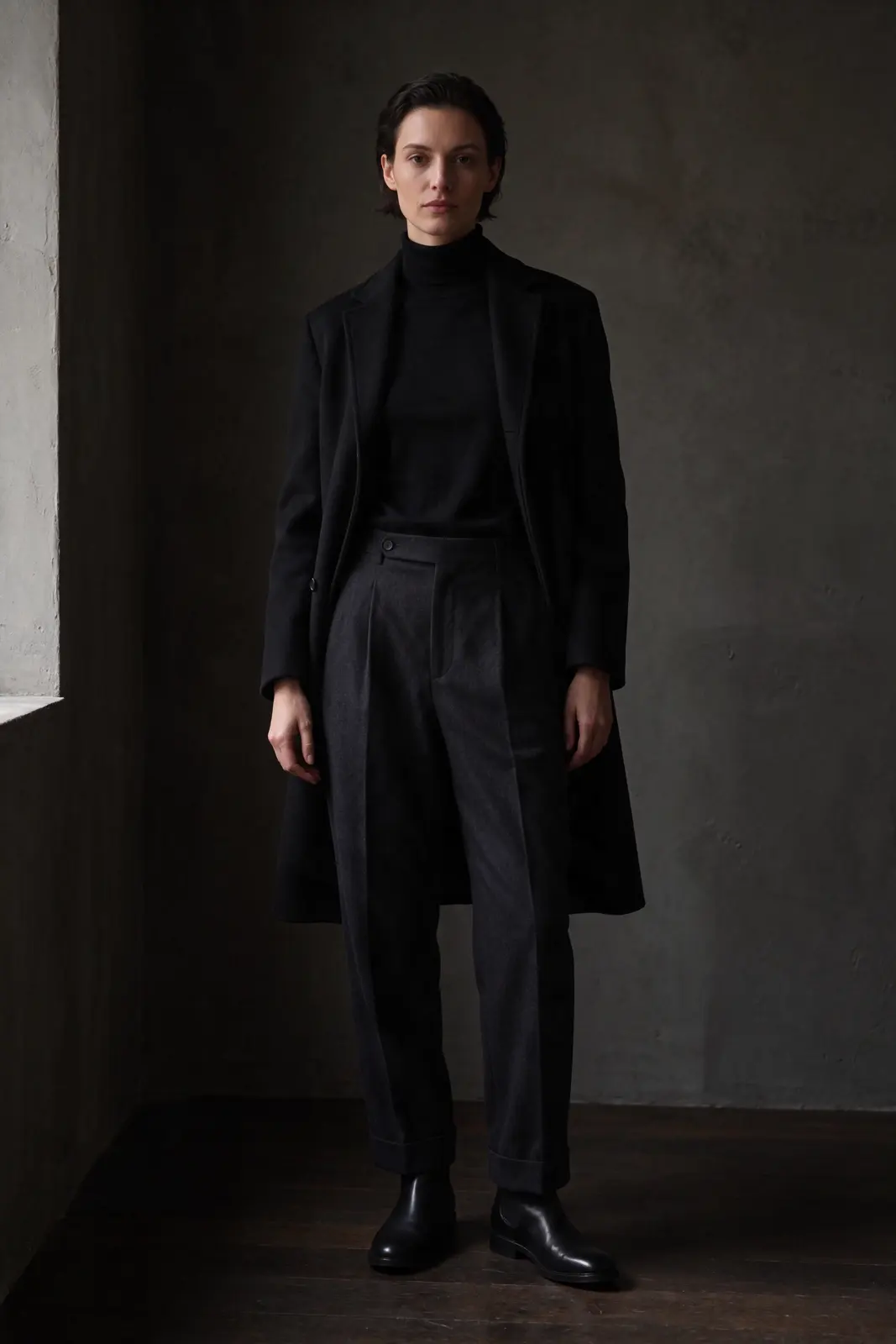
A coat is the one piece everyone sees first and you notice last. It goes over everything else, so it has to fit over everything else, and still look as if it was cut for you. These are the five places our fitters look, in the order they look at them.
The shoulder
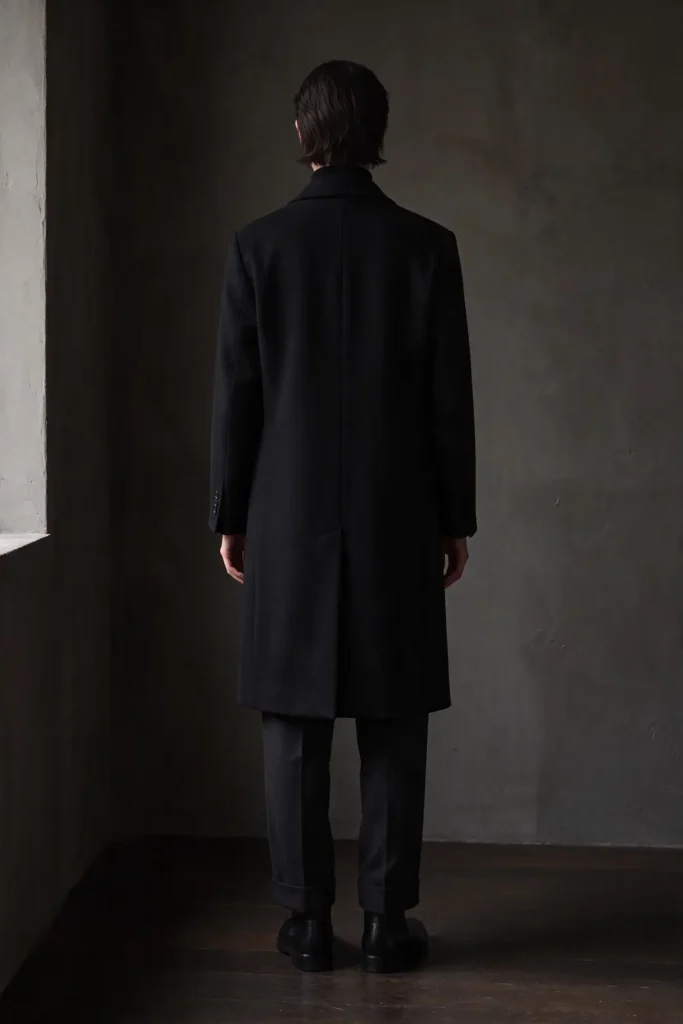
The shoulder seam should end where your shoulder does, or a centimetre beyond it on a relaxed coat. Press a flat hand down on the top of the sleeve: if it dents before it reaches you, the coat is too big. Shoulders are the one thing an alteration can’t fix, so start here.
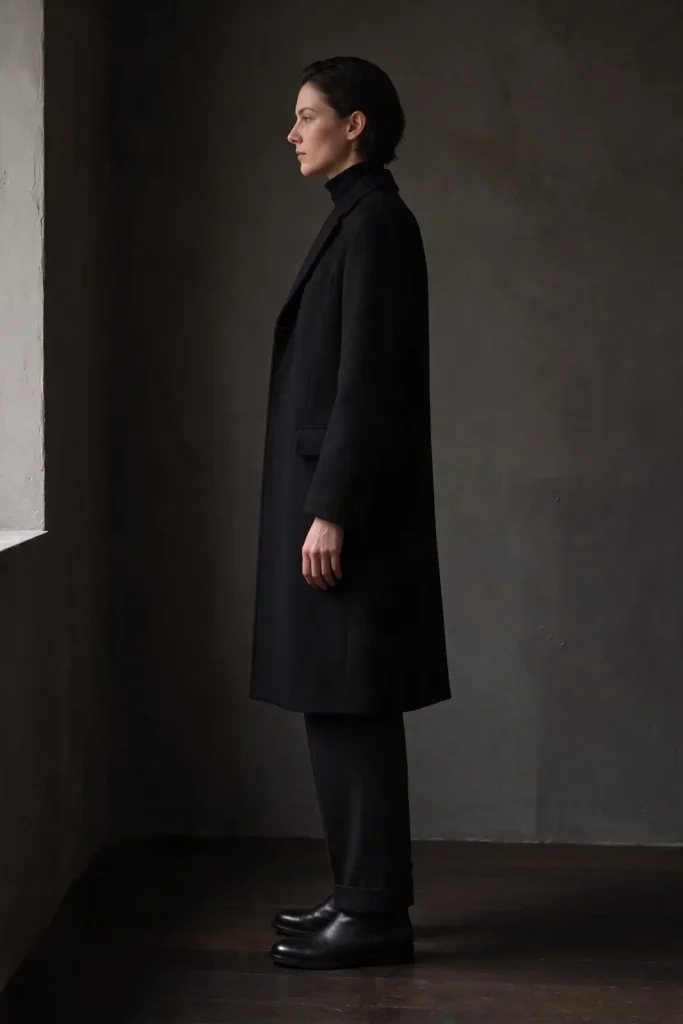
The collar
From the side, the collar should sit against the back of your neck with no gap, over whatever you wear underneath. A roll neck is the hardest test, which is why our fittings use one.
The chest and the button
Buttoned over a knit, the fronts should meet without pulling into an X at the button. On the Marlow the placket is hidden, so look for ripples either side of it instead.
The sleeve
With your arms at your sides, the sleeve should cover the shirt cuff and finish at the base of the thumb. It is the easiest alteration there is; we do it free on made-to-measure coats.
The length
Knee-length is the most useful: it covers a jacket and doesn’t catch on stairs. From behind, the vent should hang closed when you stand still.
If you are between two sizes, the size guide on each product says which way to go, and you can always write to us with your measurements.