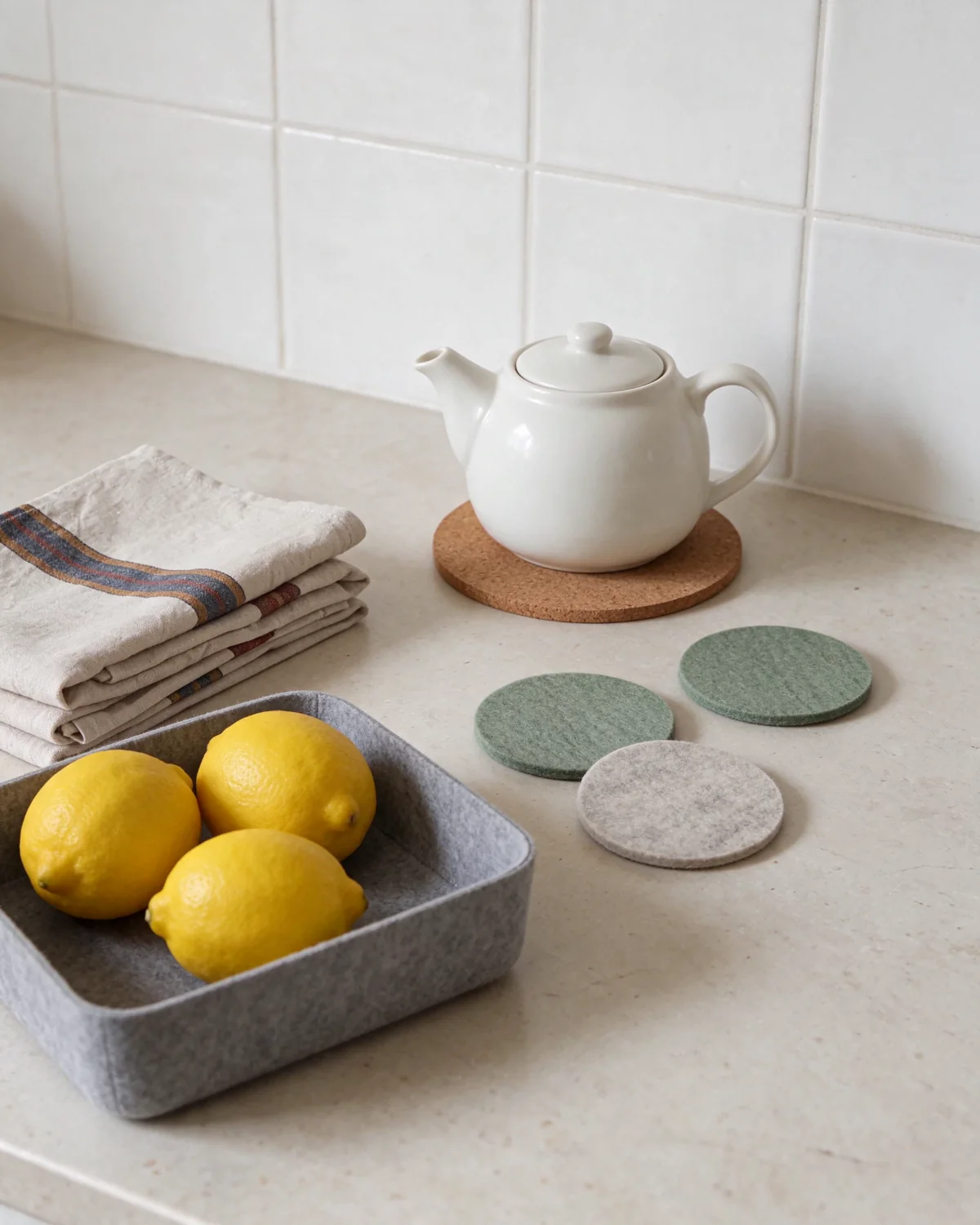
The things that do the most work in a kitchen get the least thought. A tea towel is used ten times a day, a coaster takes every hot mug, a trivet every pot straight off the hob. They are all natural materials, and each one wants something slightly different.
Linen tea towels
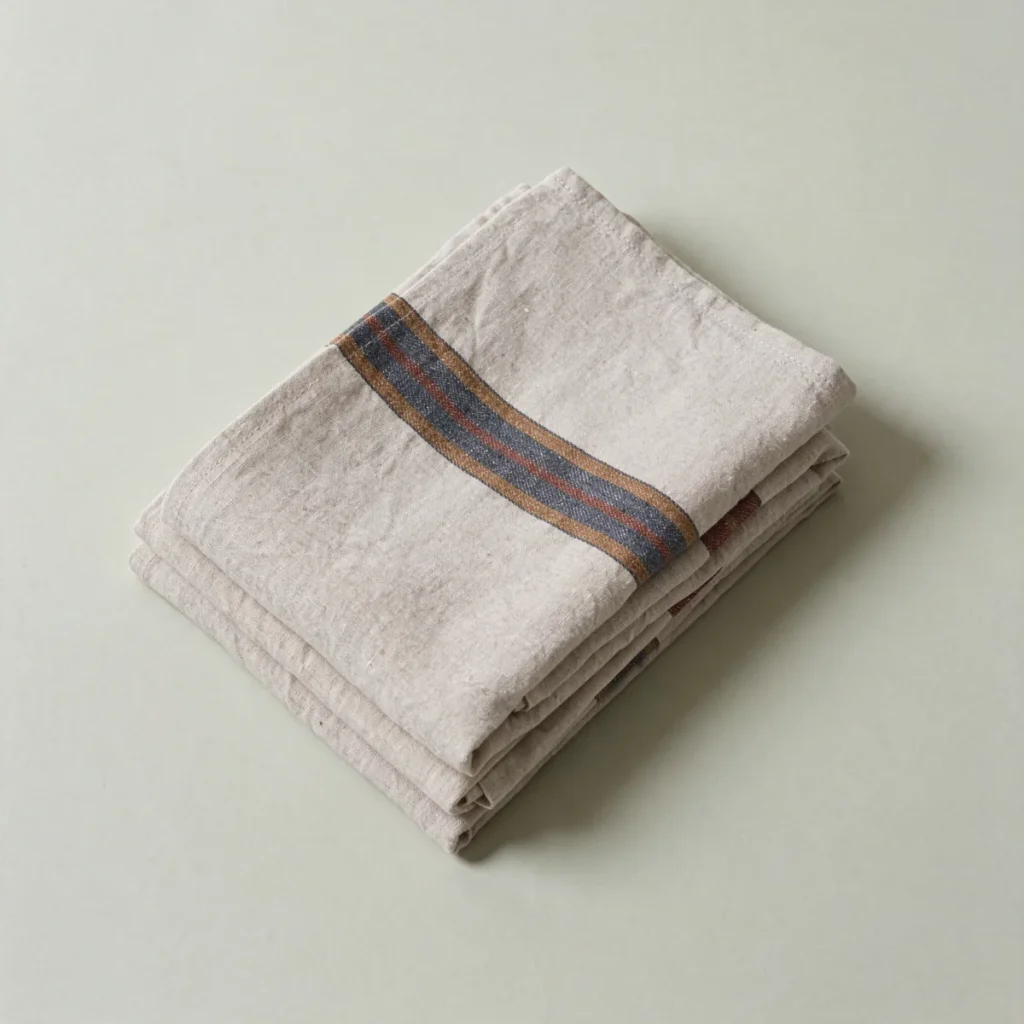
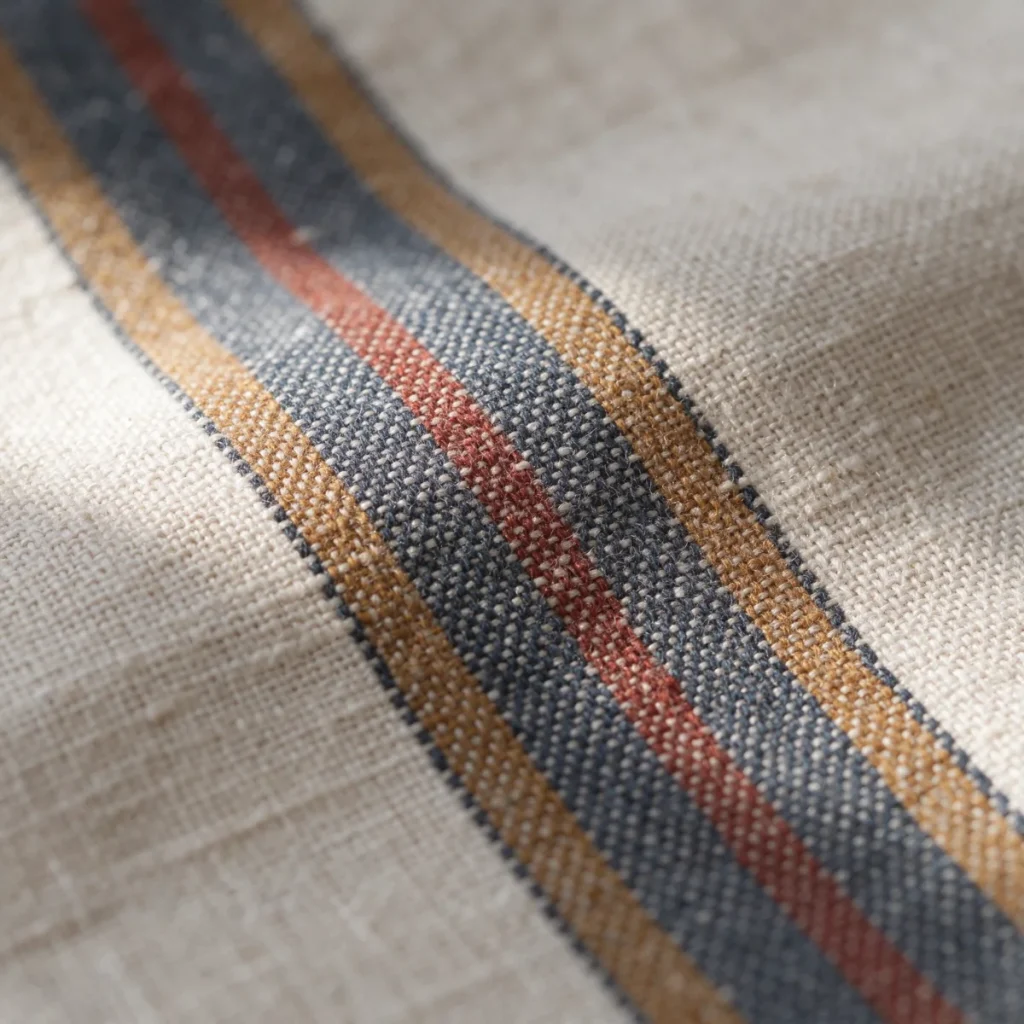
Our Linen Tea Towels are natural linen with a woven slate and rust stripe. Linen is at its best on glass because it dries without leaving lint, and it gets softer the more it is washed.
- Wash warm, 40°C, with similar colours.
- Skip fabric softener. It coats the fibres and stops them taking up water.
- Shake them out and hang them to dry. A line is best; a rack will do.
- Iron them damp if you like a crisp towel, or fold them warm and leave them be.
New linen can feel a little stiff and shed a few fibres for its first washes. That passes. After half a dozen loads it drapes, dries faster and starts to look like the tea towels people keep for twenty years.
Felt coasters and trays
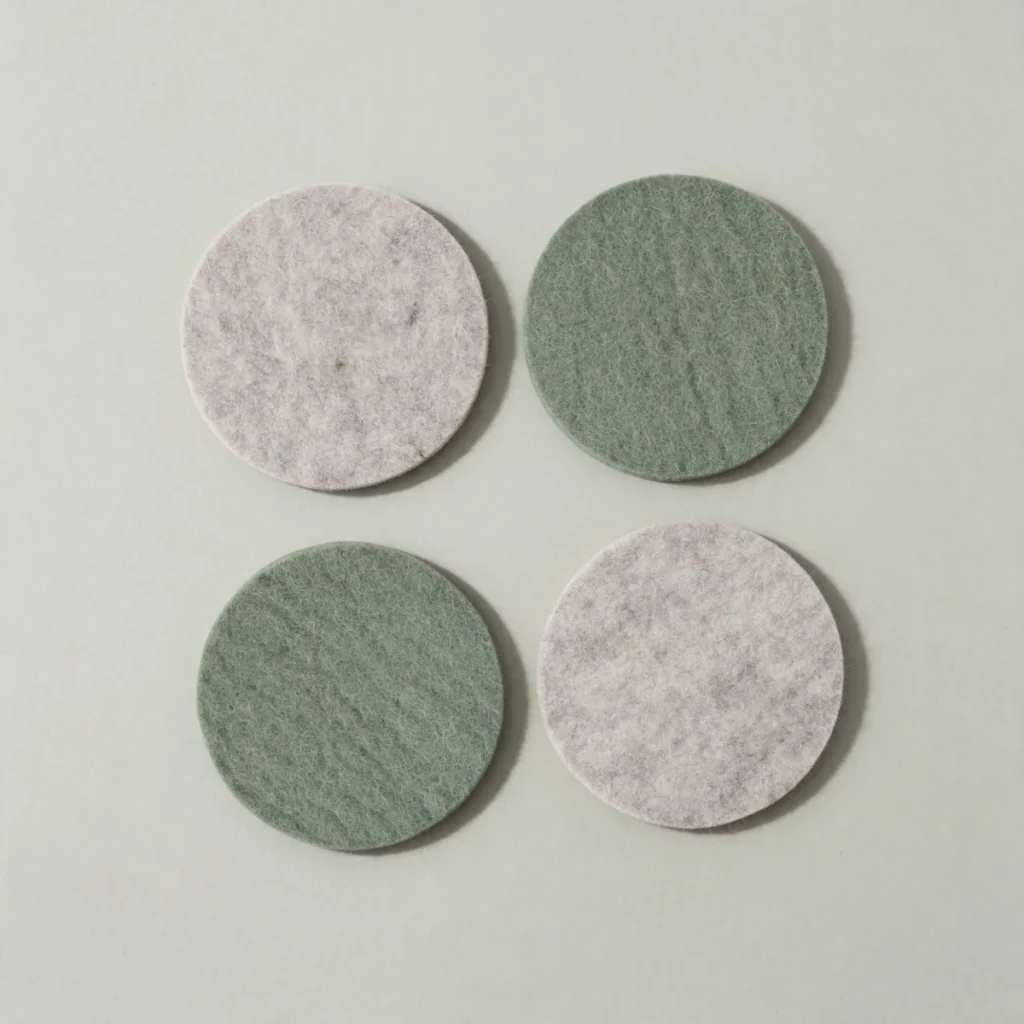
Thick wool felt, like our Felt Coasters and the catchall tray, soaks up drips and does not slide. It does not need washing often. Most marks lift with a damp cloth and a dab of wool wash, pressed in rather than rubbed.
Press, do not scrub: rubbing wet felt is what roughs up the surface.
Press, do not scrub: rubbing wet felt is what roughs up the surface. Blot it with a dry towel and let it dry flat, away from direct heat. If a coaster has curled, put a book on it while it dries.
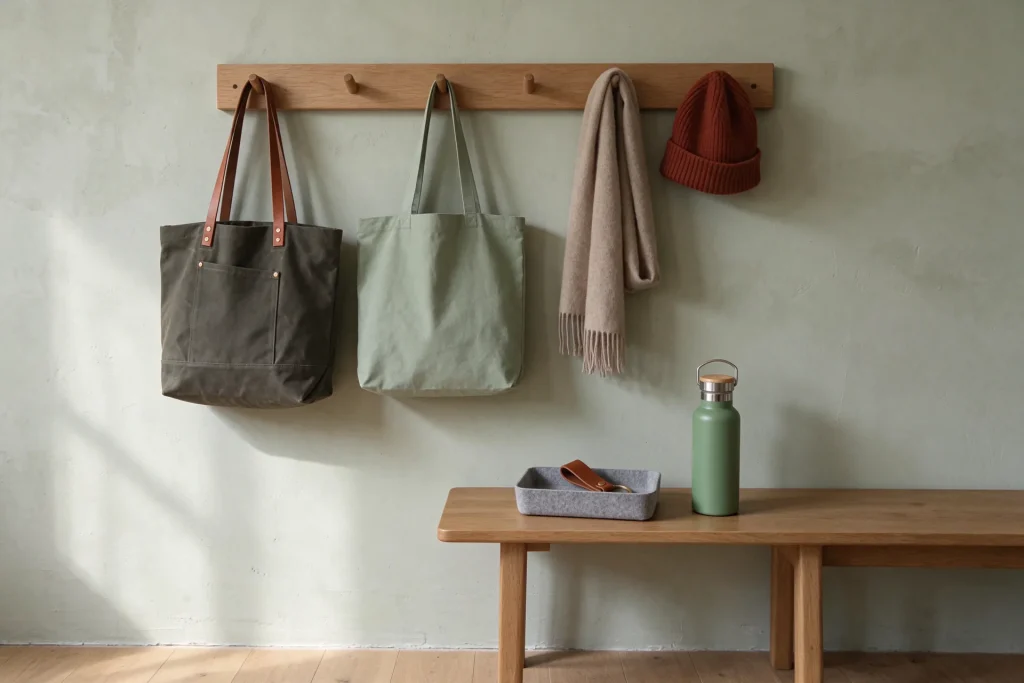
A tray of felt by the door picks up more grit than a coaster does. Tip it out over the bin once a week and brush the inside with a soft, dry brush before anything gets ground in.
The cork trivet
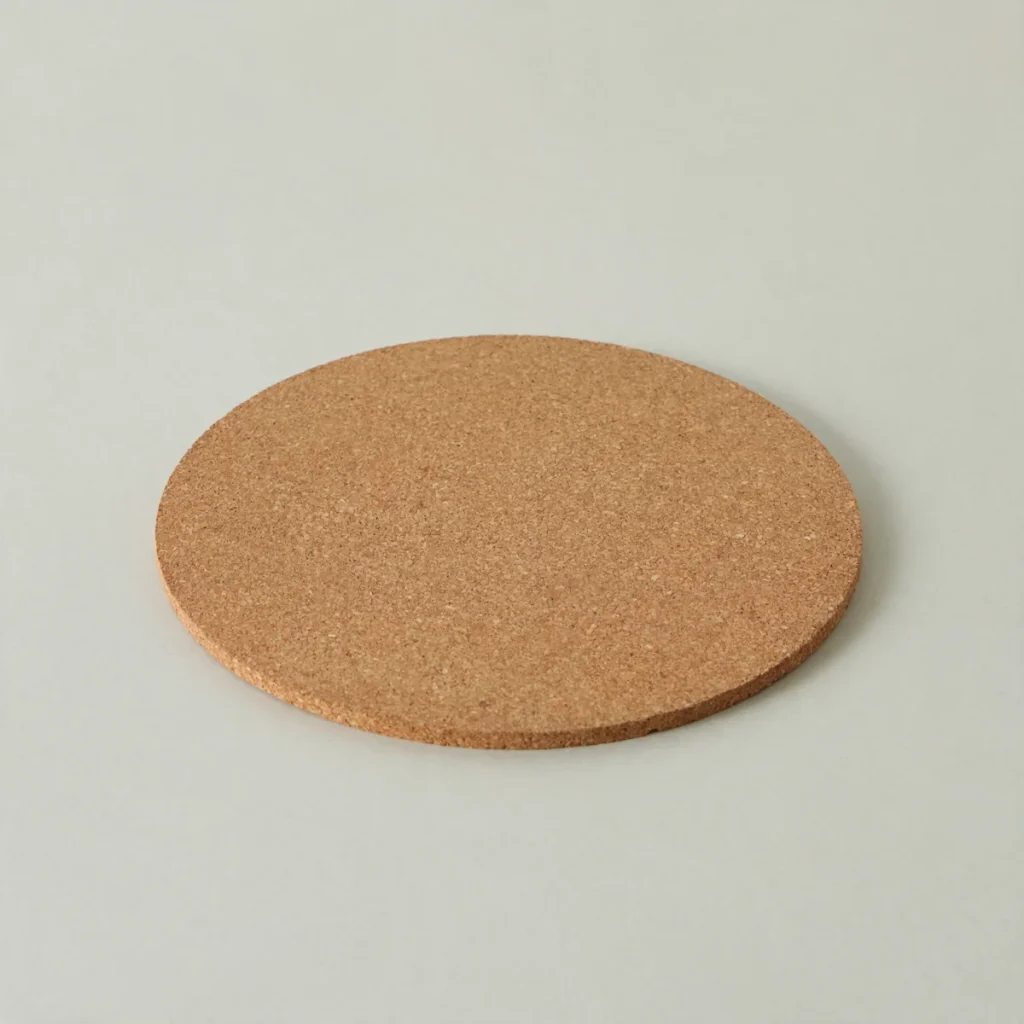
The Cork Trivet is a thick round of natural cork, 20 cm across, for a hot pot or a teapot. Wipe it with a damp cloth and stand it on its edge to dry so both sides get air. Do not soak it.
Rings and darker patches where the pans sit are part of how cork wears in. They do not change how it works.
Keep the trivet away from an open flame and off the hob itself. It is for the counter or the table, between the pan and the surface you care about.
Once a season
Every few months, wash all the tea towels in one load, lay the coasters and tray flat by an open window for an afternoon to air, and brush any crumbs out of the trivet. Ten minutes, and the kitchen things are ready for another season. There is more on every material we use on our materials and care page.