Stoneware is clay fired hot enough to turn dense and hard, close to stone. Ours is thrown by hand on a wheel, then glazed and fired. Every piece we make in it comes out a little different from the last.
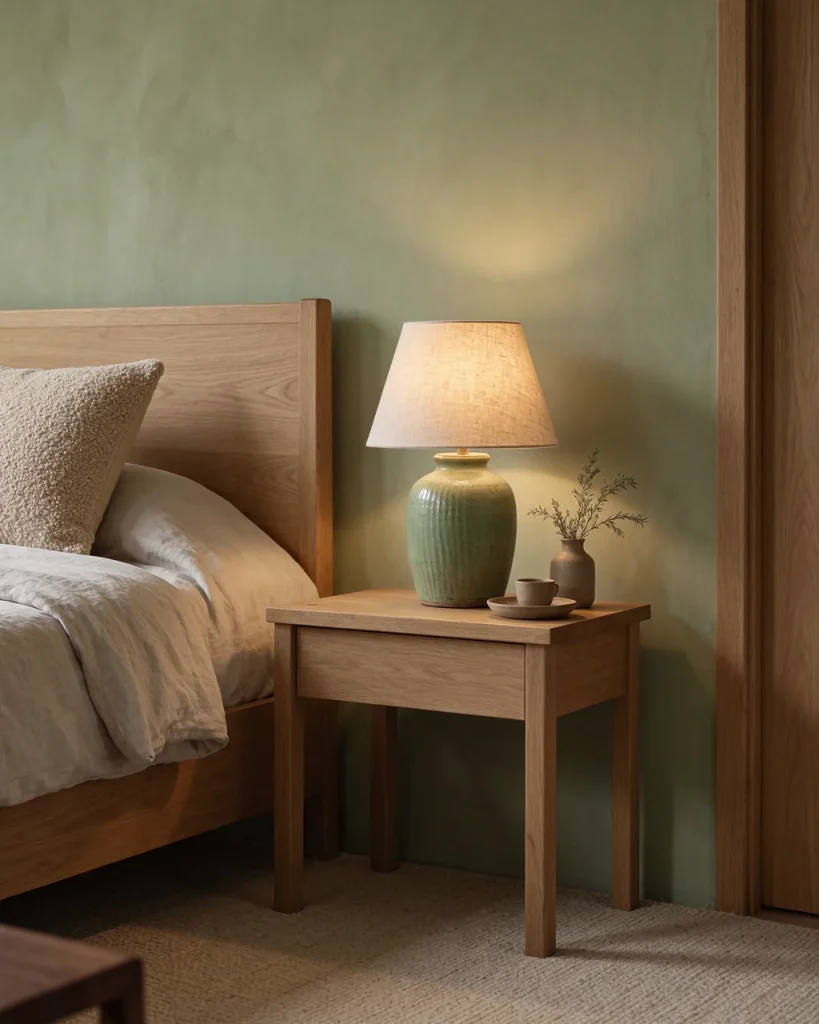
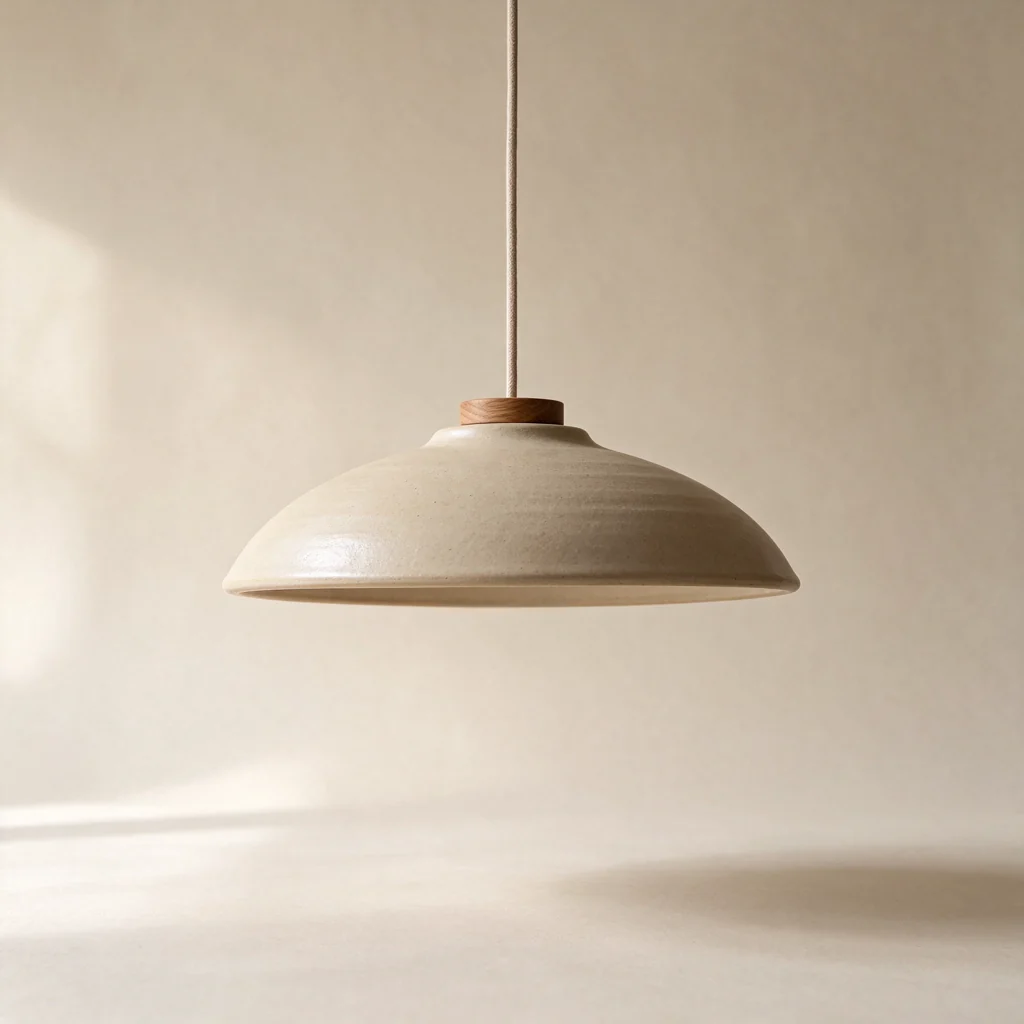
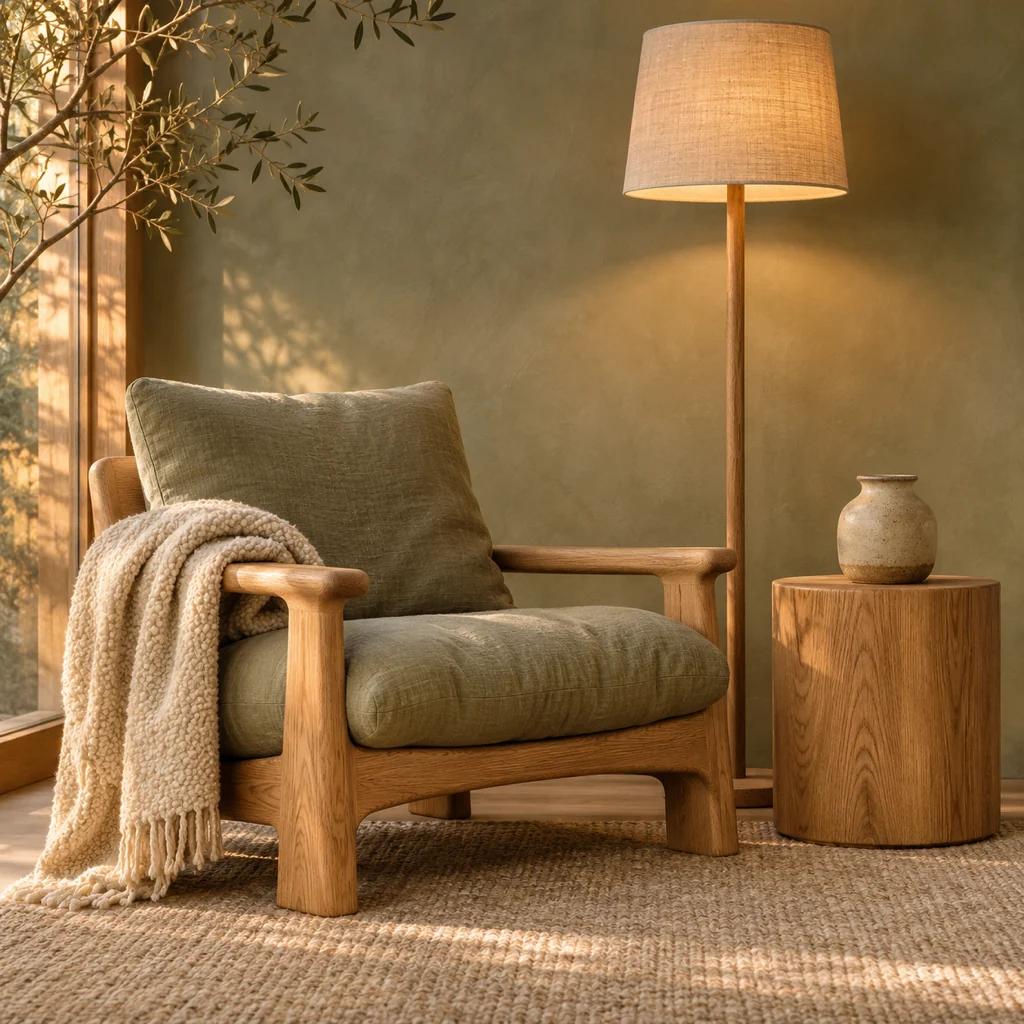
That is true of the Dune Table Lamp, the Kiln Pendant, the Ripple Vase and the base of the Stem Floor Lamp. It is the reason they look the way they do, and it is worth knowing before one arrives.
The marks of the wheel
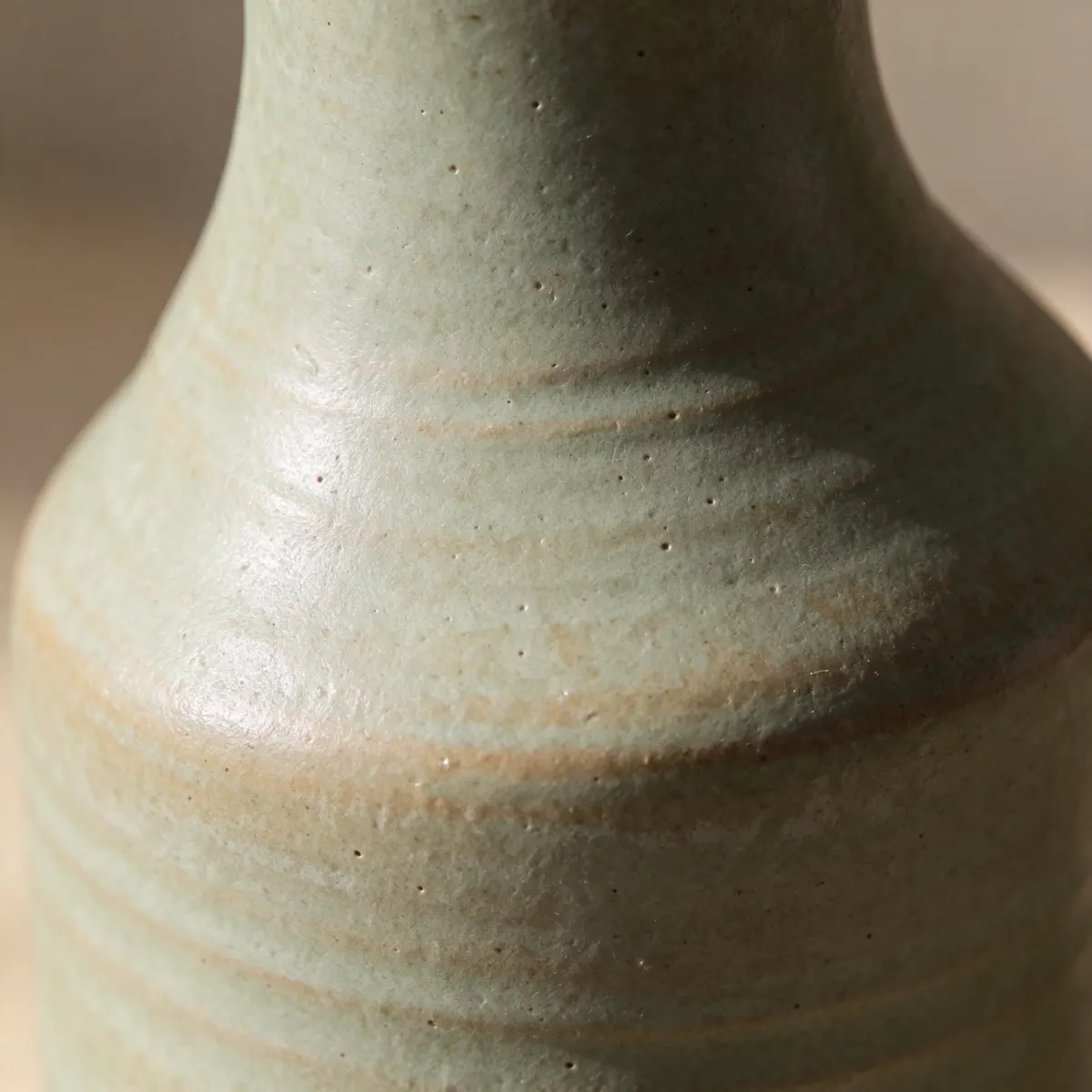
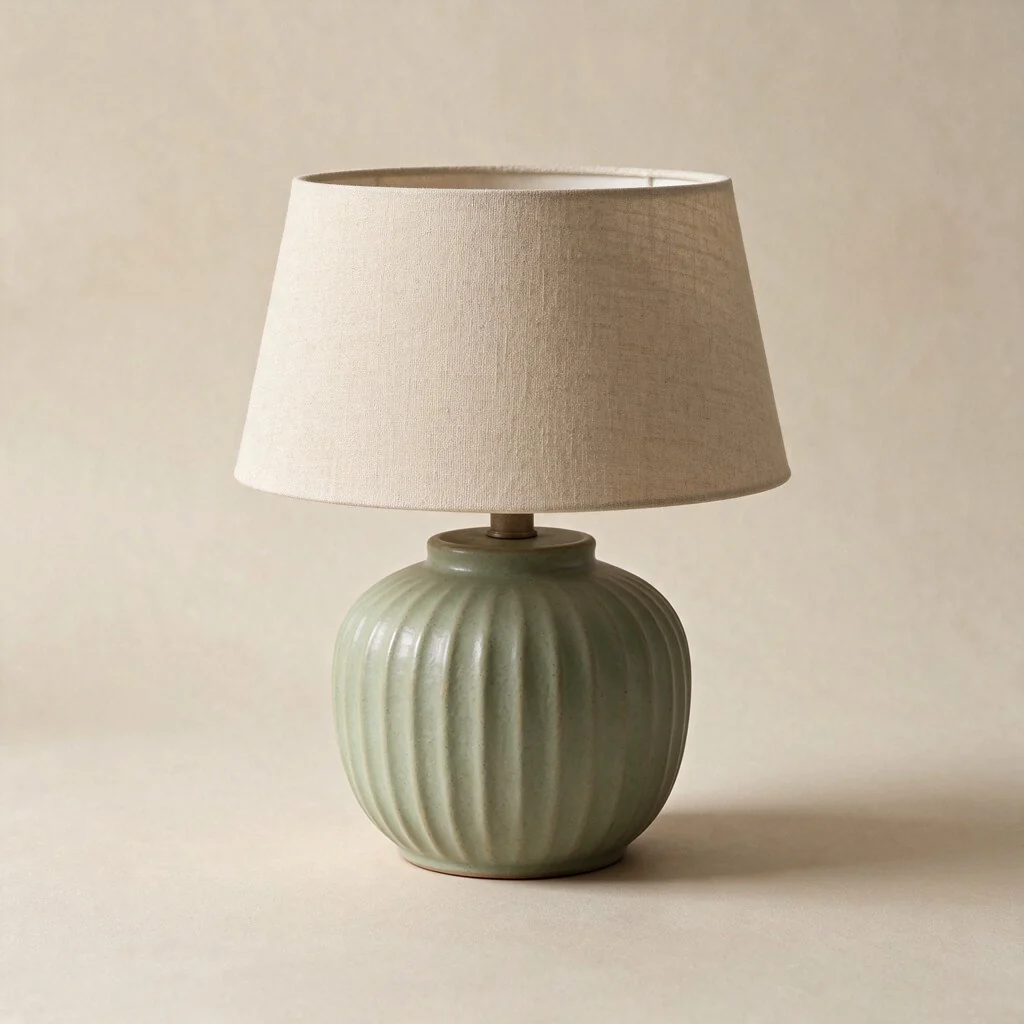
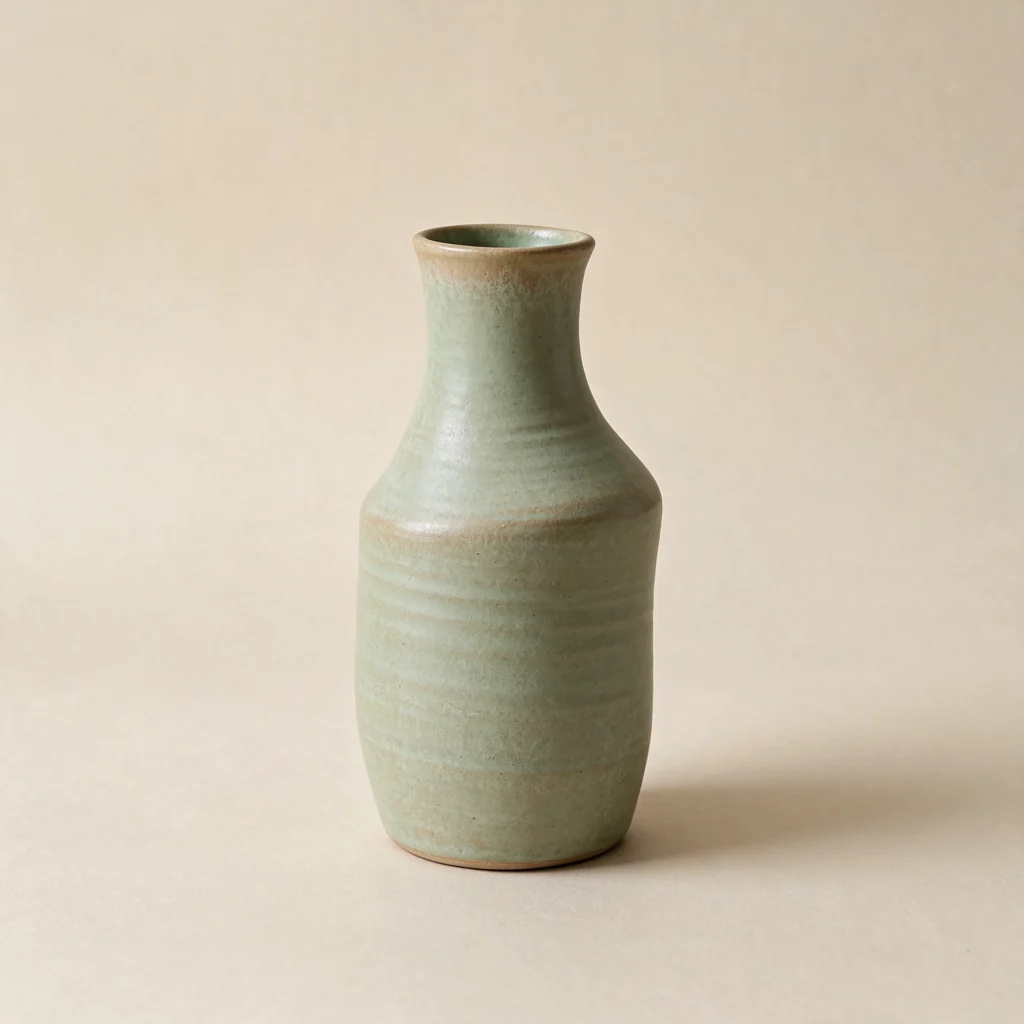
When clay is thrown, the potter’s fingers leave rings as the wall is drawn up. On most production ceramics they are smoothed away. We leave them. On the Ripple Vase they are the whole design: soft throwing ripples that catch light from the side. On the Dune lamp they become ribs, which run slightly unevenly because a hand made them.
The ribs and ripples are not only for looks. They give the surface depth, so a lamp base or a vase changes through the day as the light moves across the room.
Glaze that moves
A glaze is a thin layer of glass on the surface of the clay, and in the kiln it moves. Where the surface is raised it runs thin and the color underneath shows through; where it pools, it goes deeper. That is why our sage glaze breaks to oat over the ripples, and why the edge of one vase never quite matches the next.
The photo on the product page shows one piece; yours will be its sibling, not its twin.
The photo on the product page shows one piece; yours will be its sibling, not its twin. Same shape, same glaze, same size, with its own small differences in where the color breaks.
Why stoneware for light
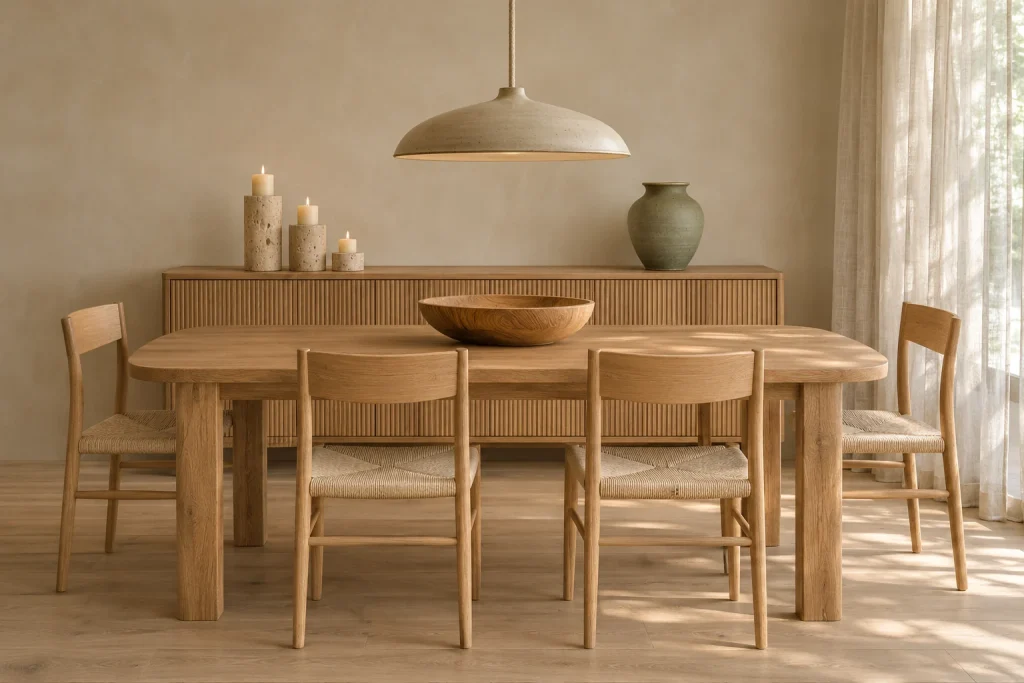
Stoneware is heavy, which is what a lamp base wants. The Dune lamp sits squarely on a bedside table and stays put when you reach for the switch. Its matte glaze takes the light softly rather than throwing it back. The Kiln Pendant is a wide, shallow dome on a linen cord, made to hang low over a dining table, where the glaze on its outside reads as a surface rather than a shine.
Living with it
Dust it with a dry, soft cloth. A barely damp cloth is fine on the vase, and on the lamps once they are switched off and unplugged. A few tiny pinholes in the glaze come from the firing. There is more on stoneware, alongside oak, linen and travertine, on our materials and care page.
We could buy in stoneware that matches to the millimetre. It would be easier to photograph. It would also look like it came off a production line, which is exactly what we want a room to stop looking like.