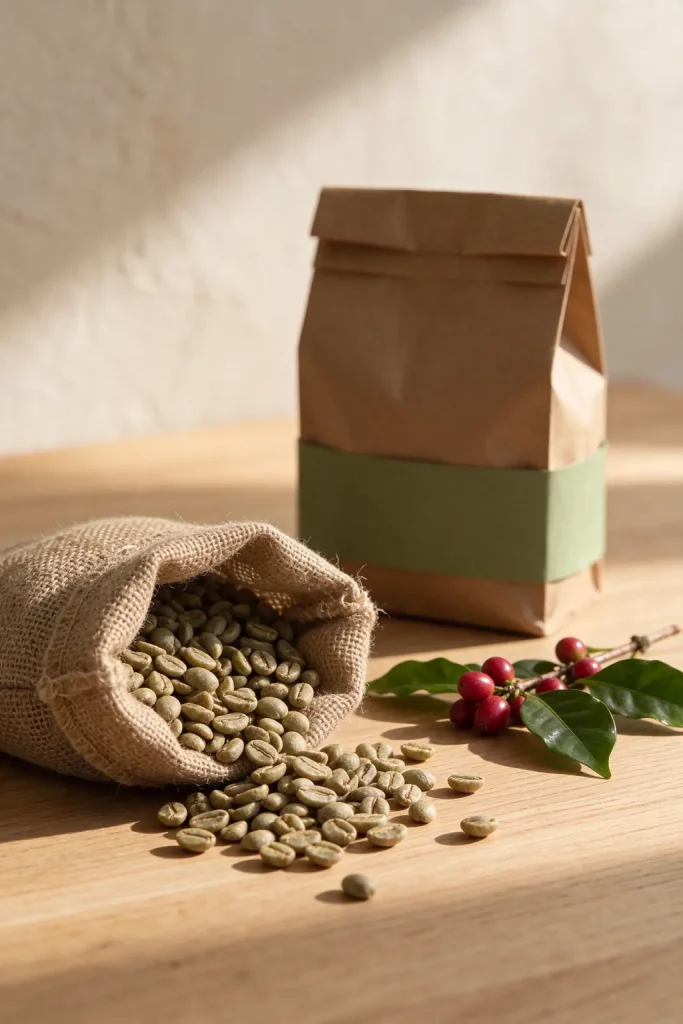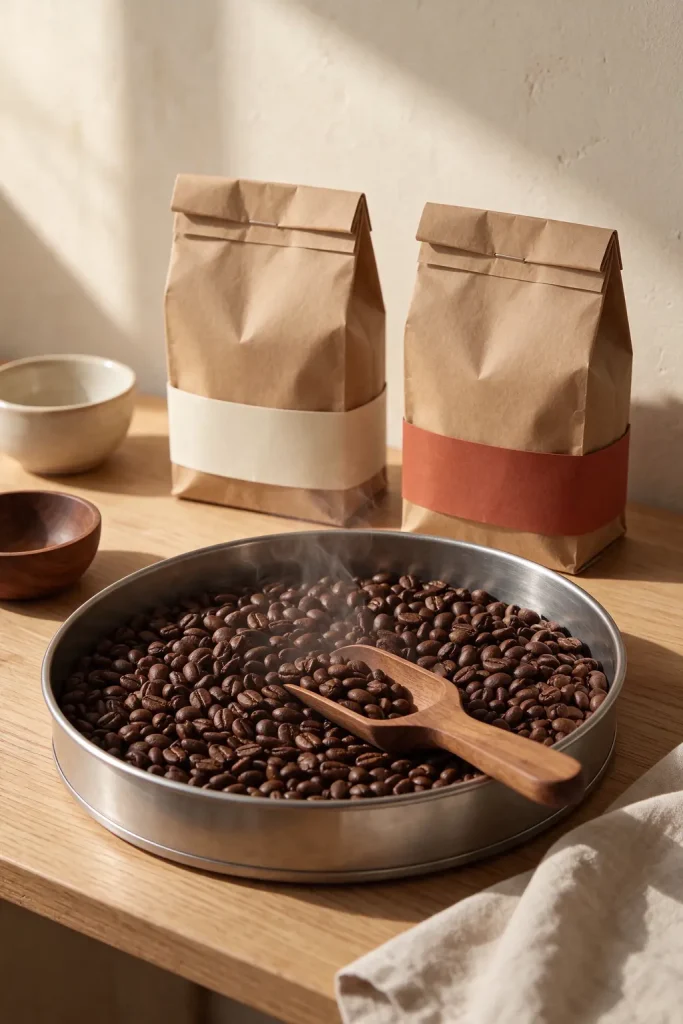
Every coffee bean is the seed of a cherry. How the fruit is taken off that seed, and how it is dried, changes the taste of the cup almost as much as where it grew. On our shelf you will find three ways of doing it.
Washed
The fruit is removed soon after picking and the beans are washed clean before drying. The cup is clear and bright, and the character of the place comes through: jasmine and bergamot in our Ethiopia Guji, blackcurrant in Kenya Nyeri.
Natural
The whole cherry dries in the sun with the seed inside, and the fruit leaves its mark. Natural coffees are heavier and sweeter, often jammy: think of the blueberry and strawberry in our Ethiopia Sidama, or the hazelnut and cocoa of Brazil Cerrado.
Honey
The skin is removed but some of the sticky fruit is left on the bean as it dries. It sits between the other two: sweet and syrupy, but still clean. Our Costa Rica Tarrazú tastes of apricot and honey.
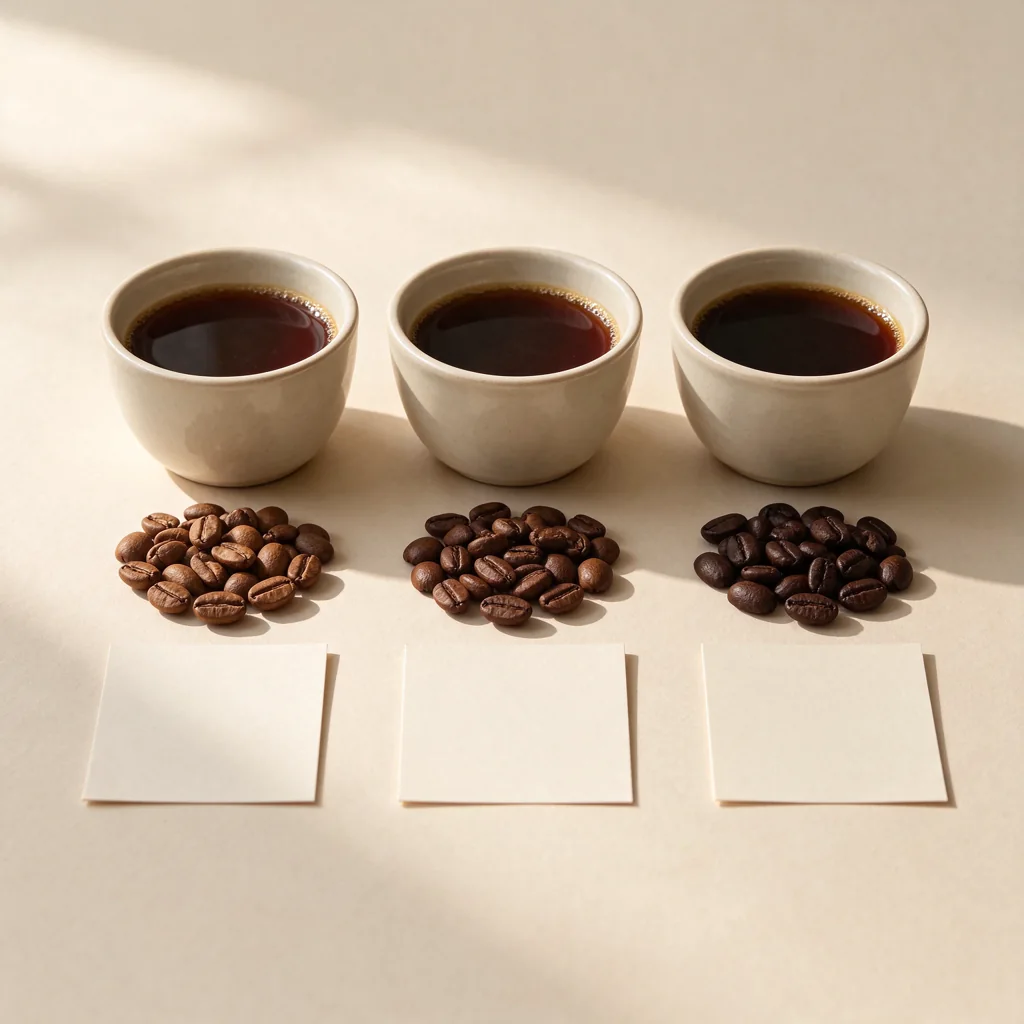
Taste them side by side
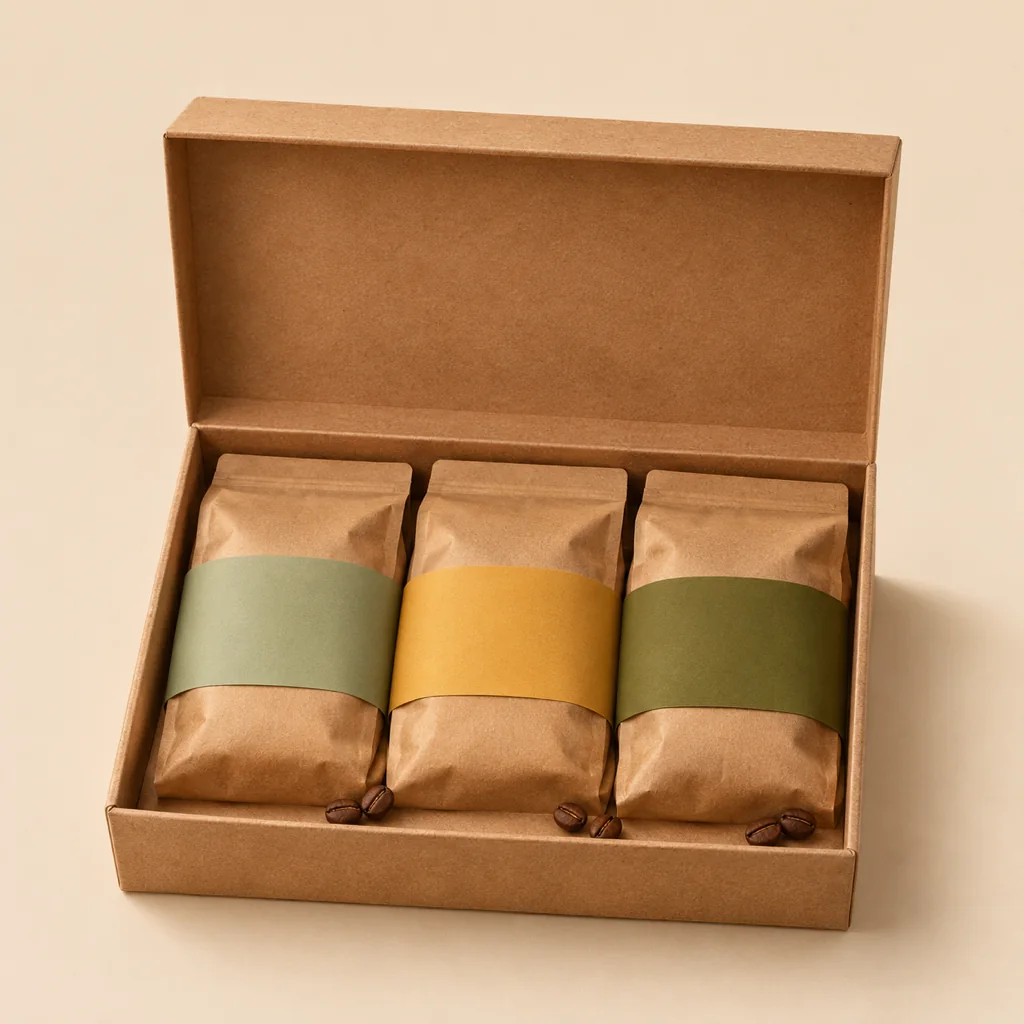
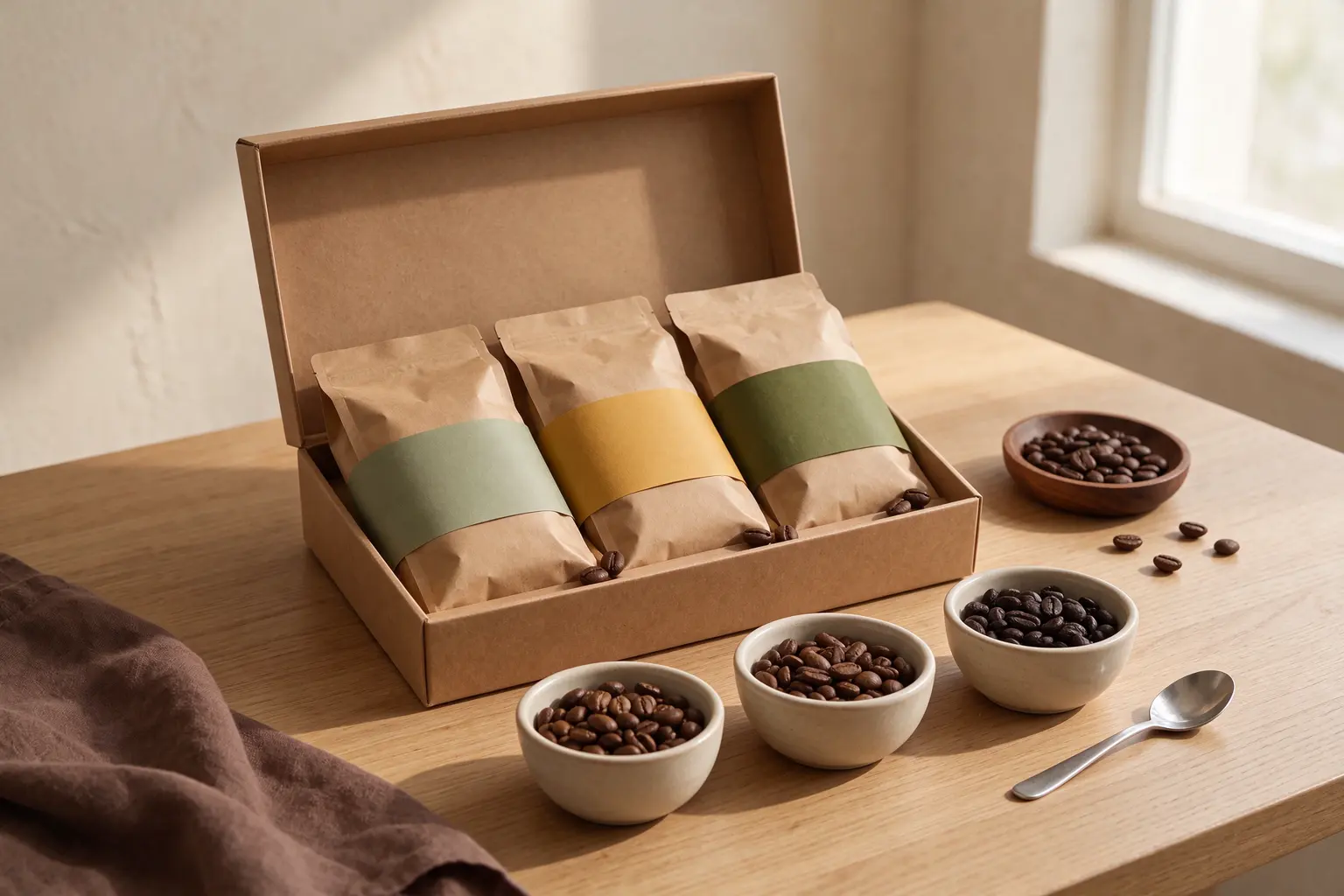
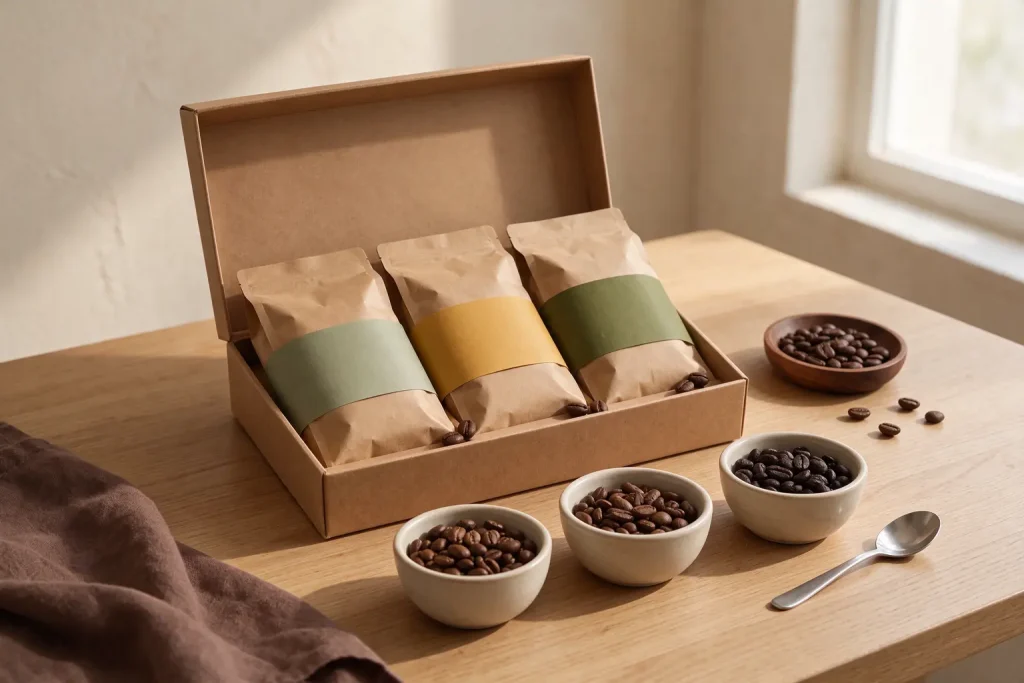
The easiest way to learn the difference is to brew them next to each other. Our Tasting Flight Gift Box holds three 100 g single origins, light to medium-dark, with cards to compare them.